
If you're a creator, expert, coach, founder or professional with an audience, there's a good chance your inbox is full of opportunities you haven't fully noticed yet. I'm not talking about another brand asking you to promote a product or someone inviting you to an event. I'm talking about the messages that come directly from the people who follow you:
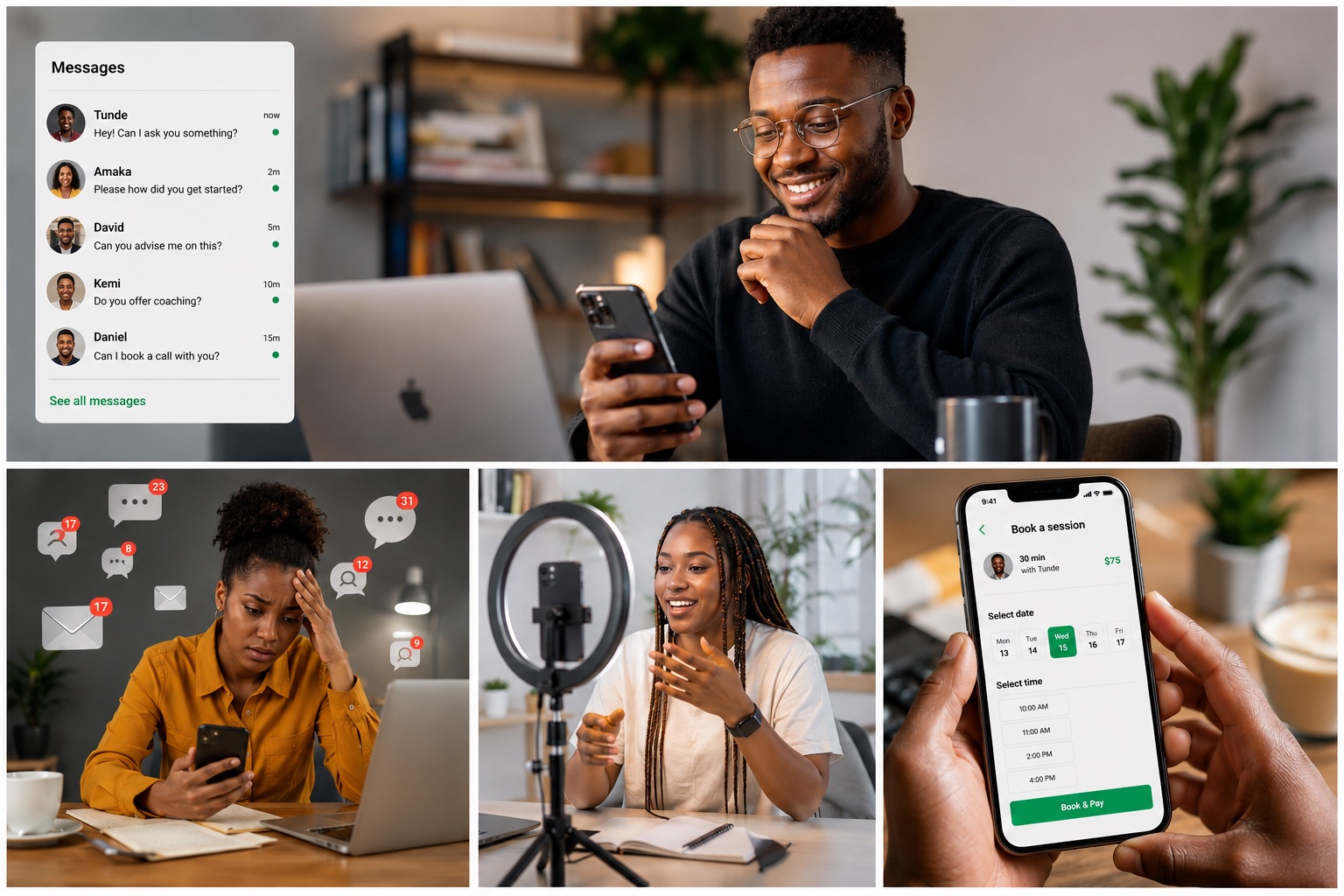
"Hey, can I ask you something?”
"How did you get started?”"
"Can you advise me on this?”
"Do you offer coaching?”
"Can I book a call with you?”
And then, inevitably: "Just one quick question."
You know the one. The "quick question" that somehow turns into a 45-minute conversation, three voice notes and a follow-up call. But here's the thing: your DMs are trying to tell you something. They're telling you what your audience values, what they trust you for and what they might actually be willing to pay you for.
Your inbox might be your best audience research tool
Creators spend a lot of time trying to understand their audiences. You look at your analytics, check your views and engagement, run polls and study which posts perform well. All of that is useful, but sometimes the best audience research isn't hiding in your analytics. It's sitting in your inbox. Your DMs are where your audience stops being a number and becomes a real person with a real problem. Someone might watch 100 of your videos without ever saying a word. Then one day, they send you a message:
I've been following your content for six months. I'm starting a business and I don't know where to begin. Could I talk to you for 30 minutes?”
That's more than a message. It's a signal. It tells you that your content has built trust. It tells you that someone sees you as having knowledge they don't have. And it tells you there may be an opportunity to create something more valuable than another social media post. Maybe that person doesn't need another Reel.
Maybe they need you.
The problem with "just one quick question"
There's nothing wrong with answering questions from your audience. It's one of the best ways to build a strong community. The problem starts when your inbox becomes an unpaid customer support centre, consulting desk, advice hotline and coaching service—all at the same time. One question becomes five. Five questions become a conversation. The conversation becomes a voice note. The voice note becomes, "Can we jump on a quick call?” Suddenly, you've spent your afternoon giving away the exact expertise that people would otherwise pay you for.
This isn't about becoming transactional with your audience. It's about recognising that your time has value. You can still be generous. You can still share free content and help people. But you don't have to give unlimited access to your time simply because someone found you on the internet.
The creator economy has spent years teaching people how to build audiences. The next step is learning how to build boundaries and business models around those audiences.
So, what are your DMs actually telling you?
Maybe they're saying, "I want to learn from you." If people constantly ask how you built your business, how you got started in your career or how they can develop a particular skill, that's a signal. You could create one-on-one sessions, group discussions, paid questions or exclusive content.
Maybe they're saying, "I want your opinion." People often come to experts not because information is hard to find, but because they want someone experienced to help them make sense of it. If people regularly ask you to review an idea, business concept or decision, your perspective may be more valuable than you realise.
Maybe they're saying, "I want your time." When someone asks, "Can we have a call?" they're not asking for content. They're asking for access. Your time is finite, and one-on-one sessions can give people a structured way to access your expertise while allowing you to decide what your time is worth. Or perhaps they're saying, "I want more of what you share." If your audience keeps asking for deeper insights, more content or behind-the-scenes access, it may be time to think about exclusive content or subscriptions. Not everything needs to be paid, but your most engaged followers may want a deeper relationship with your work.
And sometimes, they're saying, "I want to talk to you, but I don't want to wait." When your inbox is overflowing, priority access can create value for both sides. Your audience gets a clearer way to reach you, while you get a more structured way to manage your time.
Attention is not the same as intent
This is one of the most important things creators need to understand. Someone watching your video gives you attention. Someone saving your post gives you a stronger signal. Someone commenting gives you another signal. But someone who sends you a message saying, "Can you help me?" is different.
That's intent.
They've moved from consuming your content to actively seeking something from you. This is why creators shouldn't obsess over followers alone. A creator with 5,000 highly engaged followers may have a much stronger monetisation opportunity than a creator with 500,000 passive followers. The question isn't simply, "How many people follow me?"
The better question is, "How many people trust me enough to take the next step?"
You don't need to monetise everything
Not every DM should become a transaction. Not every interaction needs a price tag. Your community is still a community. Your free content should remain free. You should still engage with your audience and answer questions because you want to. The goal isn't to turn your followers into walking wallets.
The goal is to create clear choices.
If someone wants free content, give them free content. If someone wants 30 minutes of your time, give them a way to book it. If someone wants deeper access, give them an option. The best creator monetisation models don't force people to pay. They simply make it easier for the people who want to pay to access more value.
Your audience may have already designed your product
One of the biggest mistakes creators make is asking, "What can I sell?” A better question is:
"What are people already asking me for?"
Look through your DMs. Look at your comments and emails. Pay attention to the questions people ask after your events. Look for the patterns.
If people keep asking, "Can you teach me?" maybe you should offer sessions or group rooms.
If they're asking, "Can you answer this?" perhaps paid questions make sense.
If they're saying, "Can I talk to you?" maybe it's time to offer one-on-one sessions.
If they're asking, "Can I get more of this?" maybe exclusive content or subscriptions are worth exploring.
Your audience may have already designed your product for you.
You just need to pay attention.
From DMs to a real business
This is where Inner Circle comes in.
The problem isn't that creators don't have opportunities to monetise. The problem is that those opportunities are often scattered. A creator might receive a payment through one channel, schedule a call through another, answer questions on social media and manage subscriptions somewhere else.
That's a lot of work.
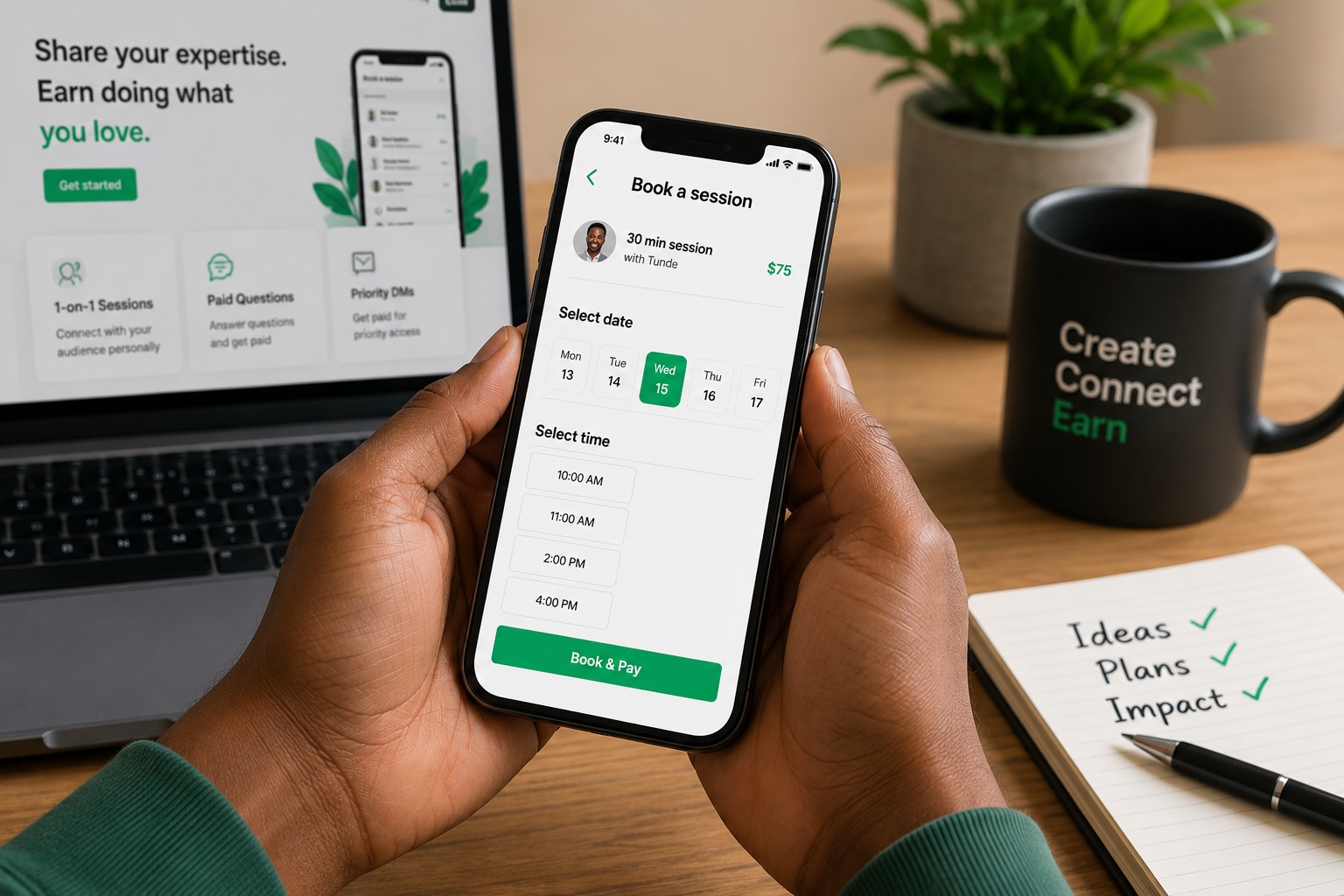
Inner Circle brings these different opportunities into one place. Creators can offer one-on-one sessions, accept paid questions, manage Priority DMs, host Group Rooms and build subscription-based relationships with their audiences.
The idea is simple:
Your audience already knows you. Your audience already trusts you. Your audience is already asking questions. Inner Circle helps you turn those interactions into structured, meaningful and paid experiences. So the next time you open your DMs and see, "Hey, can I ask you something?", don't immediately sigh. Pause. Read it. You might just be looking at your next product idea.
Your DMs are talking. Maybe it's time to listen.